Do Feral Cats Actually Use Outdoor Shelters? These 6 Things Decide It
You can’t bring them inside, but you can give them somewhere to go on the worst nights. A wary cat checks a shelter for a few things before it will sleep in one. Here they are, and the heated house built to pass all six.


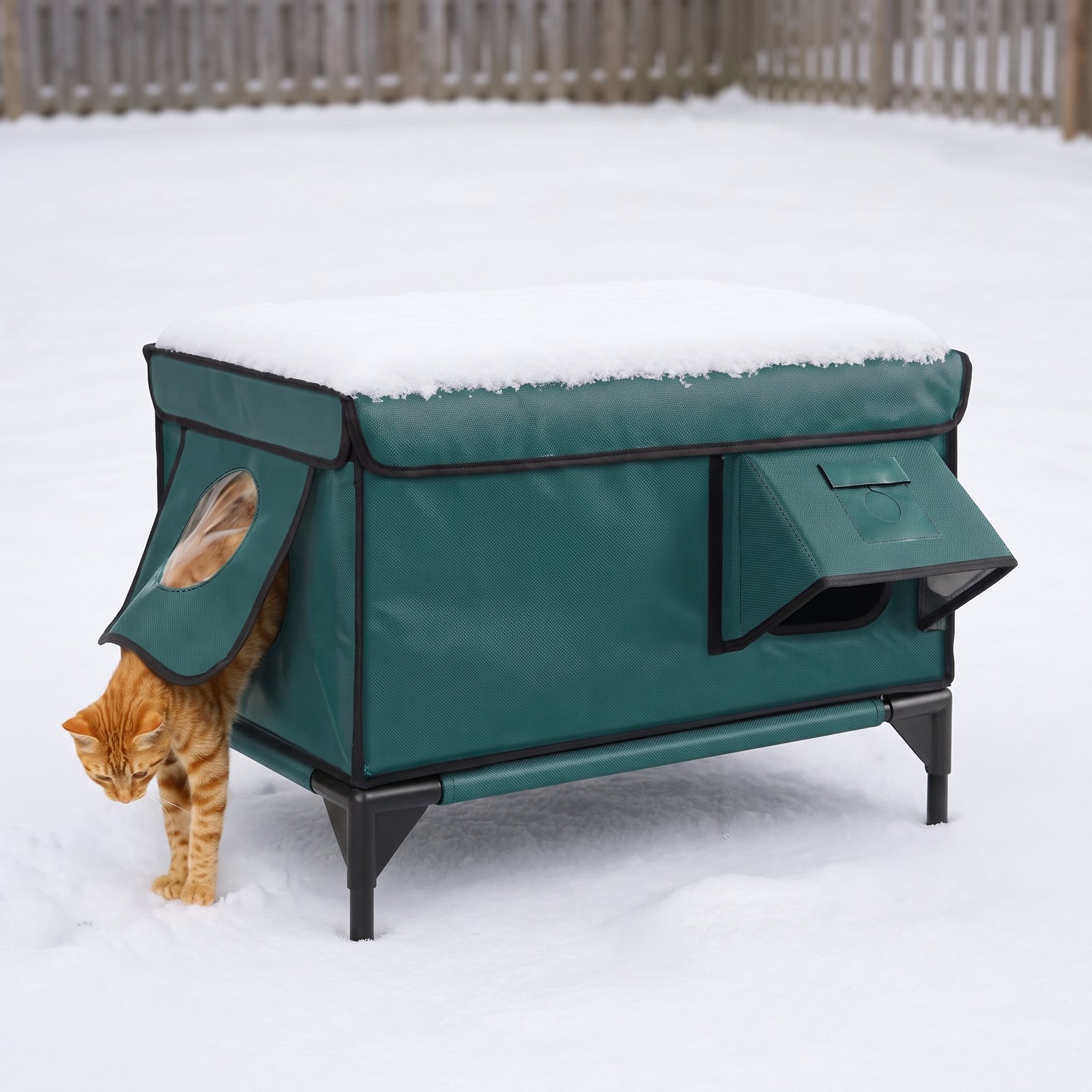


If you feed cats that won’t come inside, you know the moment the forecast drops below freezing. You put the food out, and then you wonder where they’ll spend the night.
Maybe you’ve already built them something: a storage tote with a hole cut in the side, a box under the deck. That’s a good start, and it’s more than most people do.
A wary cat doesn’t care how much work went into a shelter, though. Before it sleeps in one, it checks a few things, and a shelter that fails them sits empty on exactly the nights you built it for.
Here are the six. Where the ASPCA’s winter-shelter guide covers one, we’ve quoted it.

Heat on the Nights You Lie Awake Worrying About
Getting a cat out of the wind is step one. Keeping it warm at 3 a.m. in January is step two, and most homemade shelters stop at step one.
This house comes with a heating pad that lies flat on the floor, with the cord running out the back. Plug it in when the nights turn cold, and the foil lining on every wall and on the lid holds the warmth in. Put it on a smart plug and you can switch the heat on from your phone the minute the forecast drops.
A Second Way Out, So It’s Never a Trap
To a wary cat, a box with one opening is a dead end. If a raccoon, a loose dog or a bigger tom shows up at the door, there’s nowhere to go.
This house has two doors: a hooded flap at the front to get in, and an escape door on the side to get out fast. A cat inside always has a second way out.
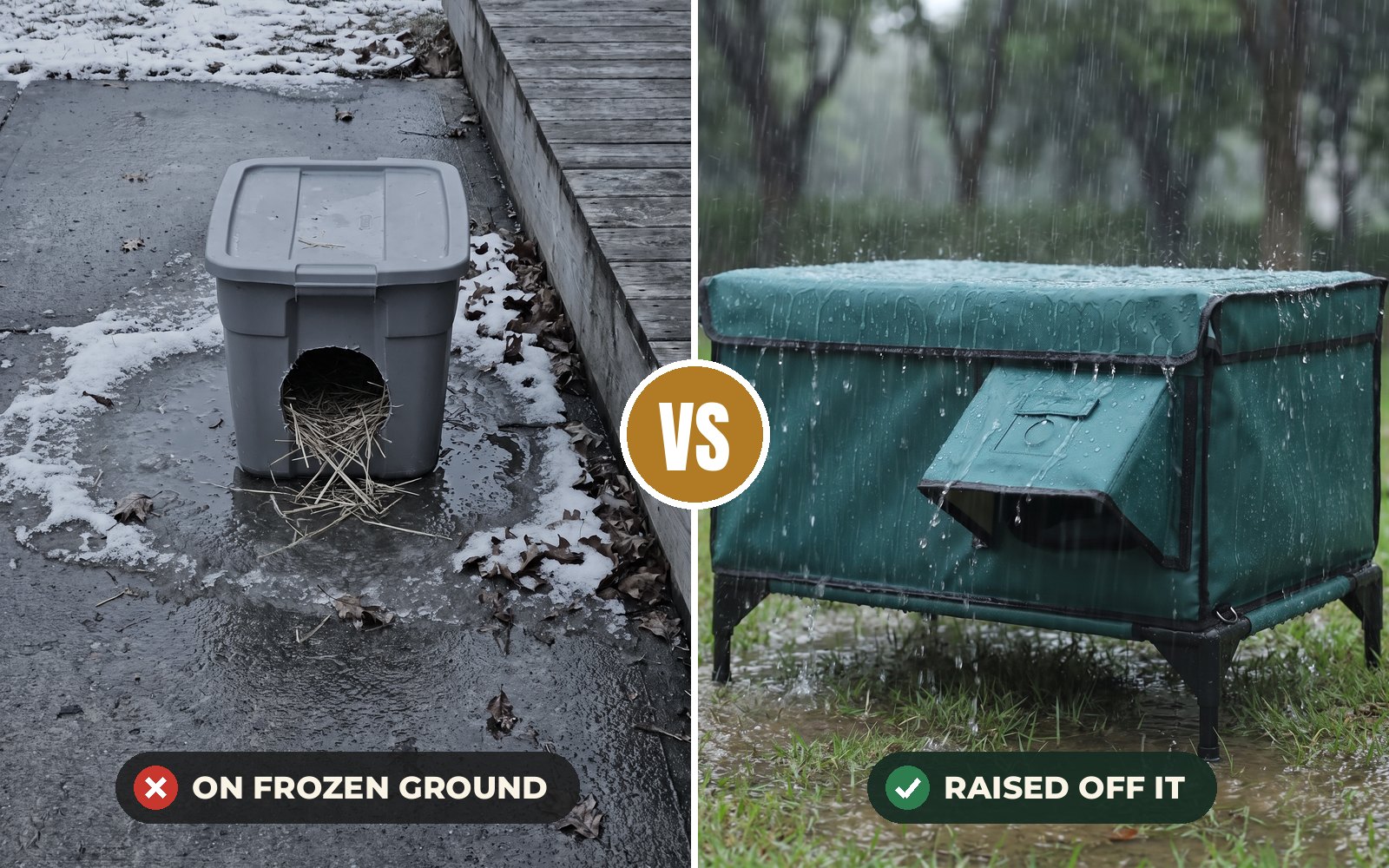
A Floor That Stays Off the Frozen Ground
A tote or box set straight on concrete, dirt or snow draws the cold right up through the floor. After a storm, it’s sitting in the puddle.
Steel legs lift this floor about 6 inches clear of snow, standing water and frozen patio. The cold and wet stay underneath, away from where they sleep.

Flaps on Both Doors Keep the Weather Out
Two doors come with one catch: two openings let in more cold air. The answer is to cover both.
The front entry has a hooded weather flap the cat pushes through, the side escape door has its own flap, and the coated outer shell sheds rain and snow. The cats come and go, and the flaps keep the weather on the outside.

The Right Spot, Out of the Wind and Near the Food
Set it where they already eat, with the entrance facing a wall or tucked under a porch roof or overhang. On open, windy ground, set a couple of bricks against the legs so it stays put.
For the heat, run the pad’s cord along the wall to a covered, GFCI-protected outdoor outlet, out of reach of chewing. Unplugged, it’s still a raised, insulated shelter with two doors. The pad is for the cold nights.

A Reason to Walk In, and Time to Get Used to It
Most outdoor cats won’t walk into something new on the first night. Caretakers get them in with food, one small step at a time:
- Night 1Set the house by the feeding spot and put their food right below the entrance.
- Week 1Put a little food outside and a few treats just inside the flap. Something that smells good, like salmon or chicken, pulls them in.
- Week 2Stop the outside food and keep the treats inside. Once they find treats in there every day, they start staying.
- First freezePlug in the pad for the cold nights and keep the treats going.
Some cats move in within days. Some take a few weeks. That’s why the time to set it up is before the first hard freeze, not the night of it.
The Box Under the Deck vs. This House
A homemade shelter gets a cat out of the wind. Here’s how it does on the rest of the list.
Comparison reflects general differences between this house and typical homemade box or tote shelters.
The Purvio Heated Outdoor Cat House
Raised, foil-lined, two doors, with the heating pad in the box. Built for the cats you feed but can’t bring inside.

Cats use it, or it’s free
Set it up and try the food trick. If the cats won’t use it within 60 days of delivery, return it for a full refund. No hassle, no questions.
What Caretakers Say
You already feed them every day. You can’t make them come inside, and on the coldest night of the year you won’t be out there with them.
What you can do is make sure they have somewhere warm to go, and that they already know the way in.
Advertisement. The Cat Owner’s Notebook is published by Purvio, which sells the cat house featured on this page. Quotes are from ASPCApro’s “Winter Shelters for Community Cats: FAQs and Cold Weather Tips.” The ASPCA has not reviewed or endorsed this product. Follow the instructions supplied with the heating pad and use a covered, GFCI-protected outdoor outlet.